Embracing AI: Your Job Is Evolving, Not Disappearing
In this presentation, we'll explore how AI is changing the workplace, address common fears, and discover how humans and AI can collaborate effectively to enhance your career rather than threaten it.
Understanding Your Concerns
|
73%
Worried WorkersRecent surveys show that 73% of employees worry about AI replacing their jobs |
24/7
Media CoverageHeadlines constantly feature "AI will replace X jobs" narratives |
2X
Rapid AdvancementAI capabilities are progressing twice as fast as many predicted |
Your anxiety is completely understandable. Past waves of automation did eliminate certain roles, and the pace of AI development can seem overwhelming. But history tells a different story about technology's overall impact on jobs.
Learning From History: Technology as a Tool
Historical Examples That Prove the Pattern:
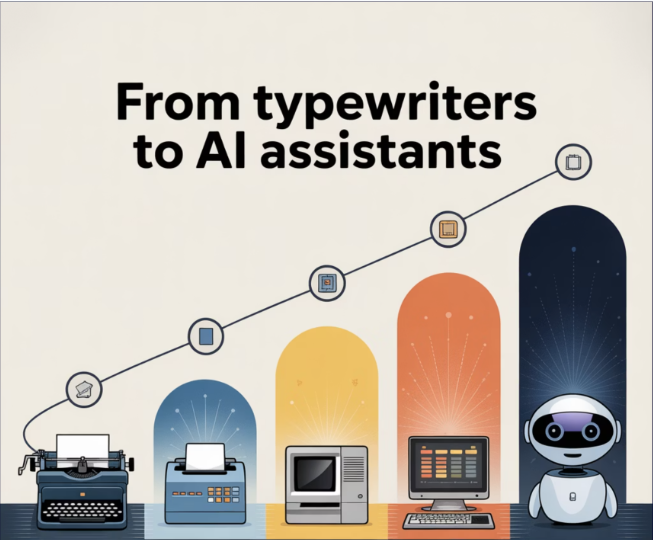
Successful professionals don't get replaced by technology—they learn to wield it. Expert pilots use autopilot to handle routine flight while they focus on weather decisions and emergency responses. Experienced doctors use diagnostic AI to enhance their pattern recognition while applying decades of clinical judgment. Experienced engineers use CAD software to rapidly prototype while contributing years of systems thinking and constraint optimization. The pattern is clear: technology amplifies expertise, creating hybrid intelligence that exceeds either humans or AI working alone.
Addressing the 'Different This Time' Argument:
Yes, this IS different—and that's exactly why action is urgent. AI isn't a rising tide that lifts all boats equally. Those who learn to use it gain exponential advantages, while those who don't fall dramatically behind. We're already seeing 10-20x productivity gains for AI-fluent professionals—work that used to take weeks now completed in hours. The question isn't whether AI will disrupt your industry—it's whether you'll be among the disruptors or the disrupted.
From Replacement to Collaboration
The most successful AI implementations follow a collaboration model rather than a replacement model. This addresses core fears about job security by positioning AI as an enhancement to your work.
Enhancement vs. Replacement
Instead of "your job is gone," the reality is "your job is evolving" to incorporate AI assistance
Increased Value
Workers who learn to leverage AI effectively become more valuable to their organizations
Hybrid Roles
New positions are emerging that specifically require both human expertise and AI skills
Real-World Collaboration Examples
|
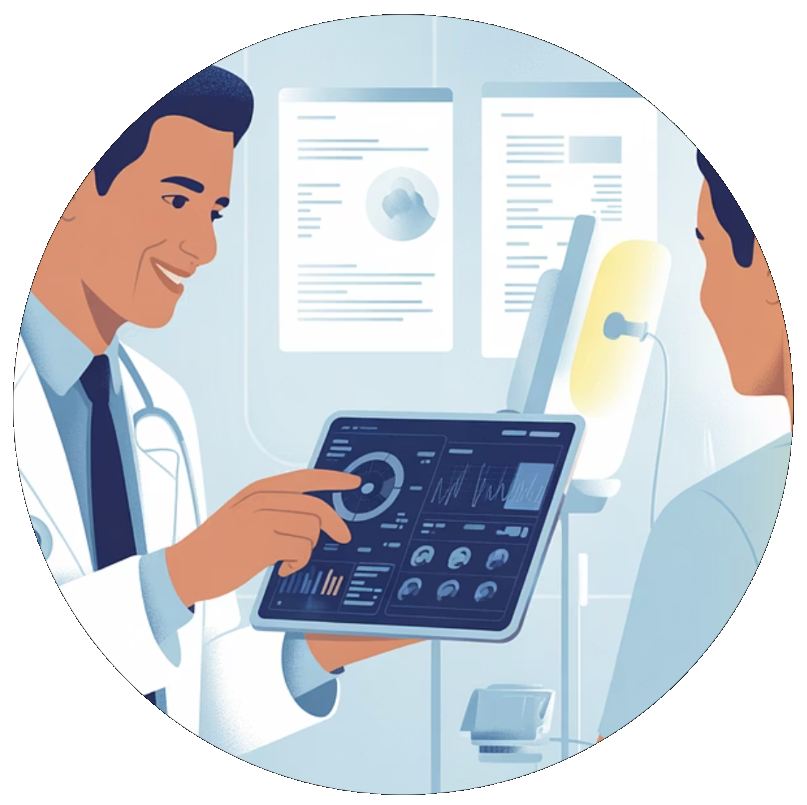
Healthcare ProfessionalsAI assists with diagnosis and data analysis, while doctors focus on patient care, complex cases, and treatment decisions that require empathy and judgment |
|
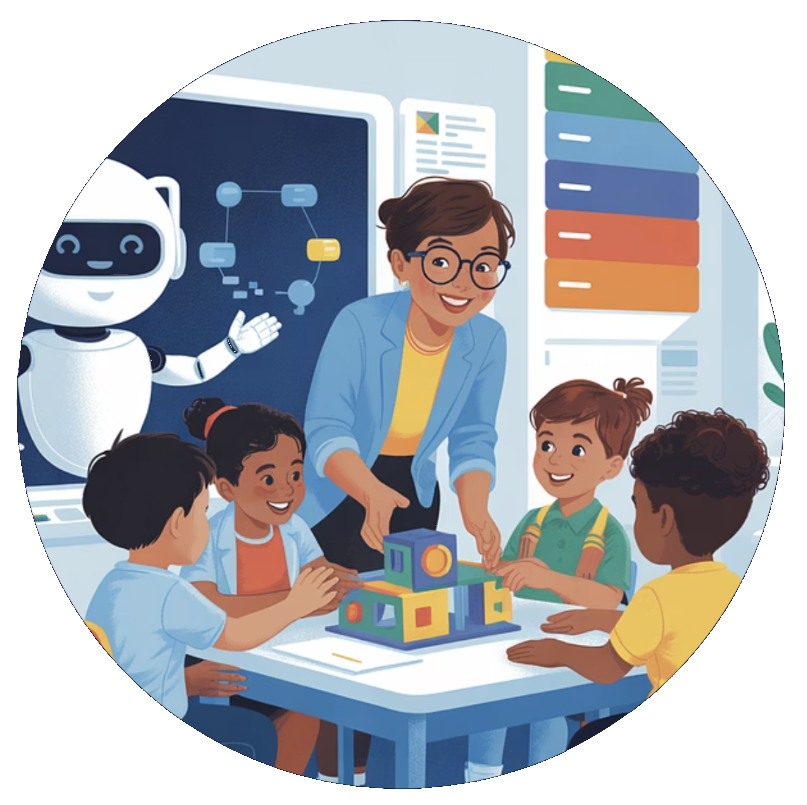
EducatorsAI handles grading and administrative tasks, allowing teachers to focus on mentoring, fostering creativity, and providing personalized guidance to students |

|
Legal ProfessionalsAI reviews documents and conducts research, freeing lawyers to focus on negotiation, counseling clients, and applying complex legal reasoning |
The Economic Case for Human-AI Collaboration
Benefits for Companies
|
Benefits for Workers
|
Research Finding:
Companies that implement collaborative AI models report 35% higher employee retention and 28% greater productivity gains than those pursuing automation-only approaches.
Your Transition Strategy
Awareness
Understand how AI is affecting your specific role and industry
Exploration
Experiment with AI tools relevant to your work to understand capabilities
Skill Development
Focus on uniquely human skills that complement AI (creativity, empathy, complex reasoning)
Integration
Develop workflows that combine your expertise with AI assistance
Evolution
Position yourself for new hybrid roles that require both human and AI capabilities
Developing Your AI Collaboration Skills
AI Literacy
Understanding AI capabilities and limitations without becoming a programmer
Human Expertise
Deepening your unique skills that AI cannot replicate
Context Engineering
Learning how to effectively communicate with AI tools to get better results
Critical Evaluation
Developing the ability to verify and improve AI outputs
These skills form a continuous cycle of improvement as you work alongside AI tools. The goal is to leverage AI for routine tasks while applying your distinctly human capabilities to add greater value.
Your Uniquely Human Advantages

While AI continues to advance, certain human capabilities remain distinctly valuable and difficult to replicate. These are your competitive advantages in an AI-enhanced workplace:
Subject Matter Expertise
Deep contextual knowledge gained through years of hands-on experience and industry relationships
Emotional Intelligence
Understanding nuanced human emotions and responding with genuine empathy
Ethical Judgment
Making complex decisions that involve moral considerations and human values
Creative Innovation
Generating truly novel ideas that transcend existing patterns and data
Moving Forward Together
Acknowledge Your Concerns
Your fears about AI are valid, but history shows technology tends to transform rather than eliminate jobs
Embrace Collaboration
View AI as a powerful tool that can handle routine tasks while you focus on higher-value work
Develop New Skills
Invest in learning both AI literacy and uniquely human capabilities that complement technology
Shape Your Future
Position yourself for emerging hybrid roles that combine human expertise with AI assistance
The future of work isn't about humans versus AI—it's about humans with AI creating more value than either could alone.